
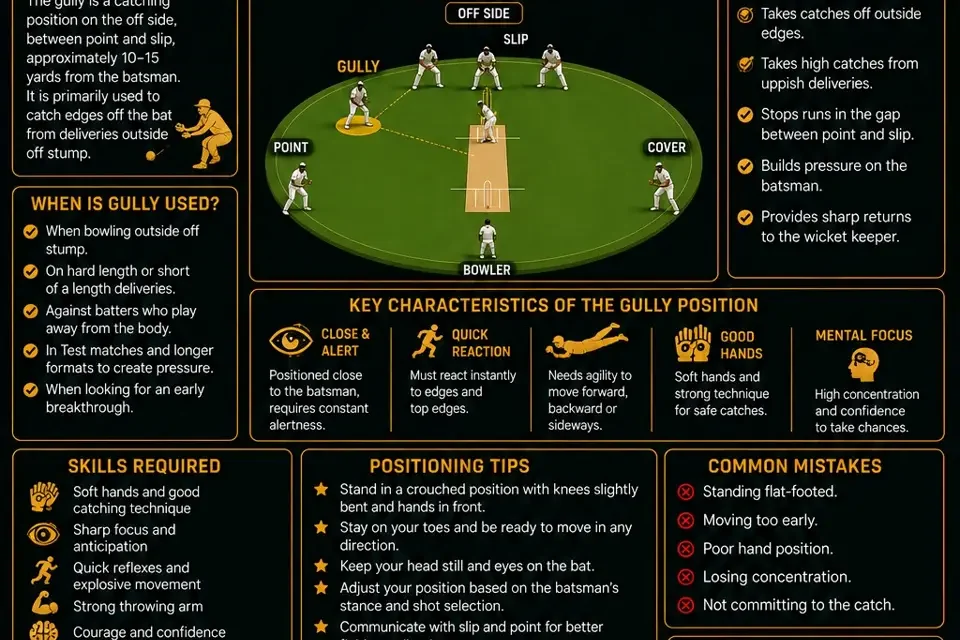
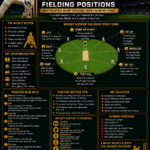
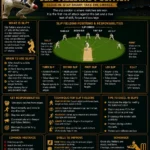
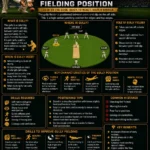
In cricket, some of the most exciting moments happen when a fielder reacts quickly to a thin edge or a top edge. The gully position is one of the most important close-catching positions on the off side. It is usually placed between point and slip, often around 10 to 15 yards from the batter, depending on the bowler, pitch conditions, and the batter’s technique. Although the position may look simple, it demands excellent anticipation, sharp reflexes, safe hands, and strong concentration.
The main responsibility of a gully fielder is to catch balls that travel away from the bat at an angle between the traditional slip and point regions. These chances often come from deliveries outside off stump, especially when the ball moves away from the batter or bounces unexpectedly. Gully is particularly valuable on pitches that offer seam movement, bounce, or carry. It can also be used against batters who frequently play away from their body or are uncomfortable against deliveries in the channel outside off stump.
A successful gully fielder must begin in a low, balanced position. The knees should be slightly bent, the weight should remain on the balls of the feet, and the hands should be held comfortably in front of the body. This position allows the fielder to move quickly in any direction. The fielder should watch the bowler’s hand and then shift focus to the bat as the ball approaches. Reading the batter’s movement can also help predict where an edge might travel.
Soft hands are one of the most important skills for this position. Instead of trying to stop the ball forcefully, the fielder should allow the hands to give slightly on impact. This helps absorb the ball’s speed and reduces the chance of it bouncing out. Good communication with the slip fielders and wicketkeeper is equally important. The gully fielder should understand the plan for each delivery and adjust the position according to the batter’s shot selection.
Young players can improve their gully fielding through edge-catching drills, reaction exercises, high-catch practice, and safe diving drills. Coaches can use a bat, tennis ball, or controlled throw-downs to create realistic chances. Players should also practise quick returns to the wicketkeeper or bowler after collecting the ball. Common mistakes include standing flat-footed, moving too early, watching only the ball, and losing concentration after several quiet deliveries.
A gully fielder may have very little action for many balls, but one sharp catch can change a match. The best approach is to stay alert, remain positive, and be prepared for every delivery. With regular practice, courage, and good technique, a gully fielder can become a valuable match-winner for any cricket team.





Recent Comments